18th May, 1940
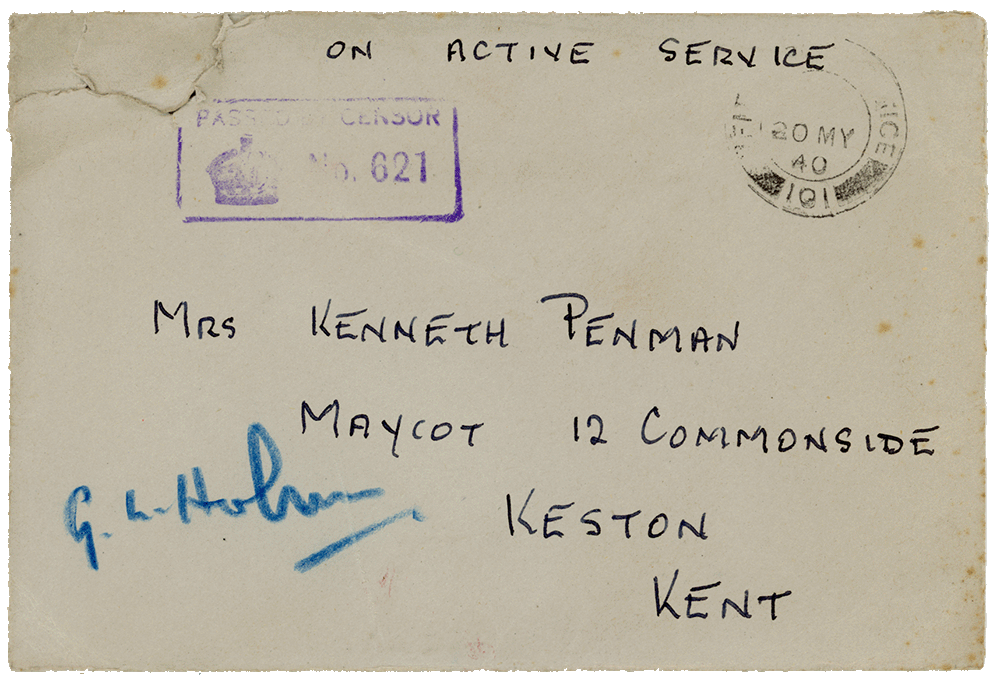
[Envelope:]
ON ACTIVE SERVICE
[Censor stamp: “PASSED BY CENSOR No. 621”]
[Field Post Office postmark: “FIELD POST OFFICE 20 MY 40”]
MRS KENNETH PENMAN
MAYCOT 12 COMMONSIDE
KESTON
KENT
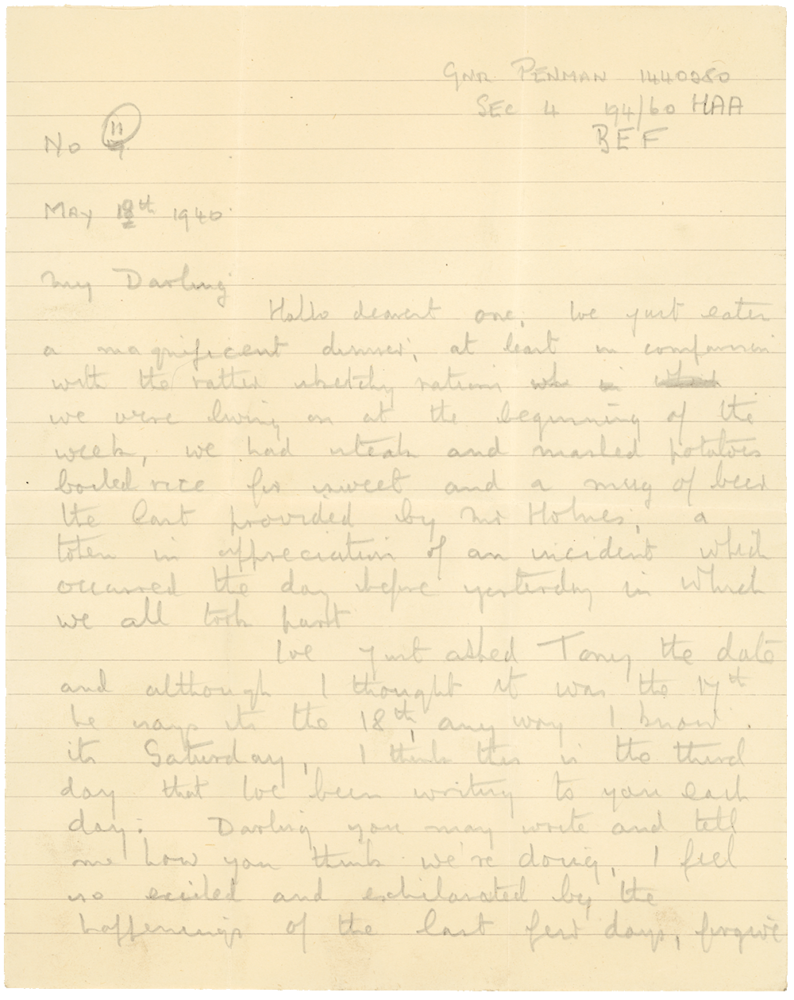
No 12
Gnr Penman 1440280
Sec 4 194/60 HAA
B.E.F.
May 18th 1940.
My Darling
Hallo dearest one, I’ve just eaten a magnificent dinner, at least in comparison with the rather sketchy rations we were living on at the beginning of the week. We had steak and mashed potatoes, boiled rice for sweet, and a mug of beer, the last provided by Mr Holmes, a token in appreciation of an incident which occurred the day before yesterday in which we all took part.
I’ve just asked Tony the date and although I thought it was the 17th he says it’s the 18th, any way I know it’s Saturday. I think this is the third day that I’ve been writing to you each day. Darling you may write and tell me how you think we’re doing, I feel so excited and exhilarated by the happenings of the last few days. Forgive…
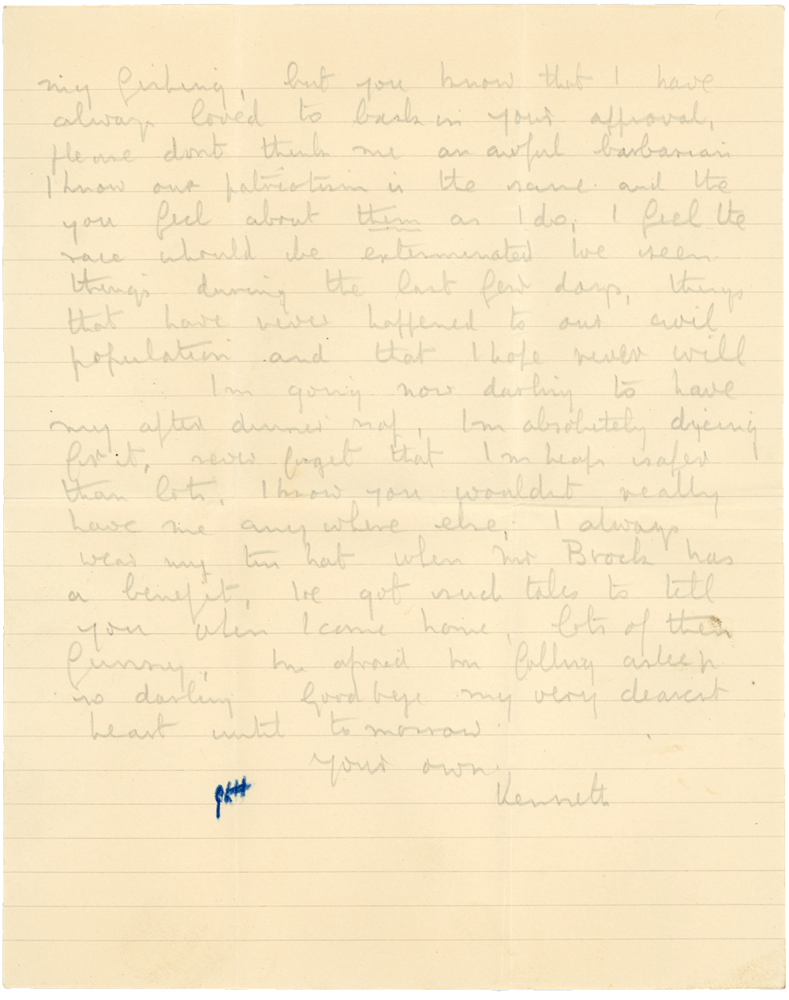
…my feelings, but you know that I have always loved to bask in your approval, please dont think me an awful barbarian. I know our patriotism is the same and that you feel about them as I do, I feel the race should be exterminated we’ve seen things during the last few days, things that have never happened to our civil population and that I hope never will.
I’m going now darling to have my after dinner nap, I’m absolutely dying for it. Never forget that I’m heaps safer than lots, I know you wouldn’t really have me anywhere else. I always wear my tin hat when Mr Boche has a benefit. I’ve got such tales to tell you when I come home, lots of them funny. I’m afraid I’m falling asleep now darling. Good bye my very dearest heart until tomorrow.
Your own
Kenneth
18th May, 1940 Kenneth
German forces capture Antwerp, Belgium’s principal seaport, further advancing their control in the region.
General Maxime Weygand replaces General Maurice Gamelin as commander-in-chief of the French armed forces, aiming to revitalize French military strategy.
German Panzer divisions reach the Somme River near Abbeville, effectively cutting off Allied forces in Belgium and northern France from the rest of the French army.
Britain’s War Cabinet decides to send an additional 1,000 rifles and 50 anti-tank guns to Calais to bolster the city’s defenses against the advancing German army.
The French government declares Paris an open city, intending to prevent its destruction by refraining from military defense within the city limits.