During World War II, “Most Secret” was Britain’s highest level security classification used only to designate information of extreme sensitivity. Beyond “Top Secret” it was reserved for intelligence that, if disclosed, could cause exceptionally grave damage to the nation.
“Ultra”, the project to decrypt Germany’s Enigma cryptographic system was “Most Secret”, as were the plans made by MI9 to help captured allies escape from enemy detention and evade capture.
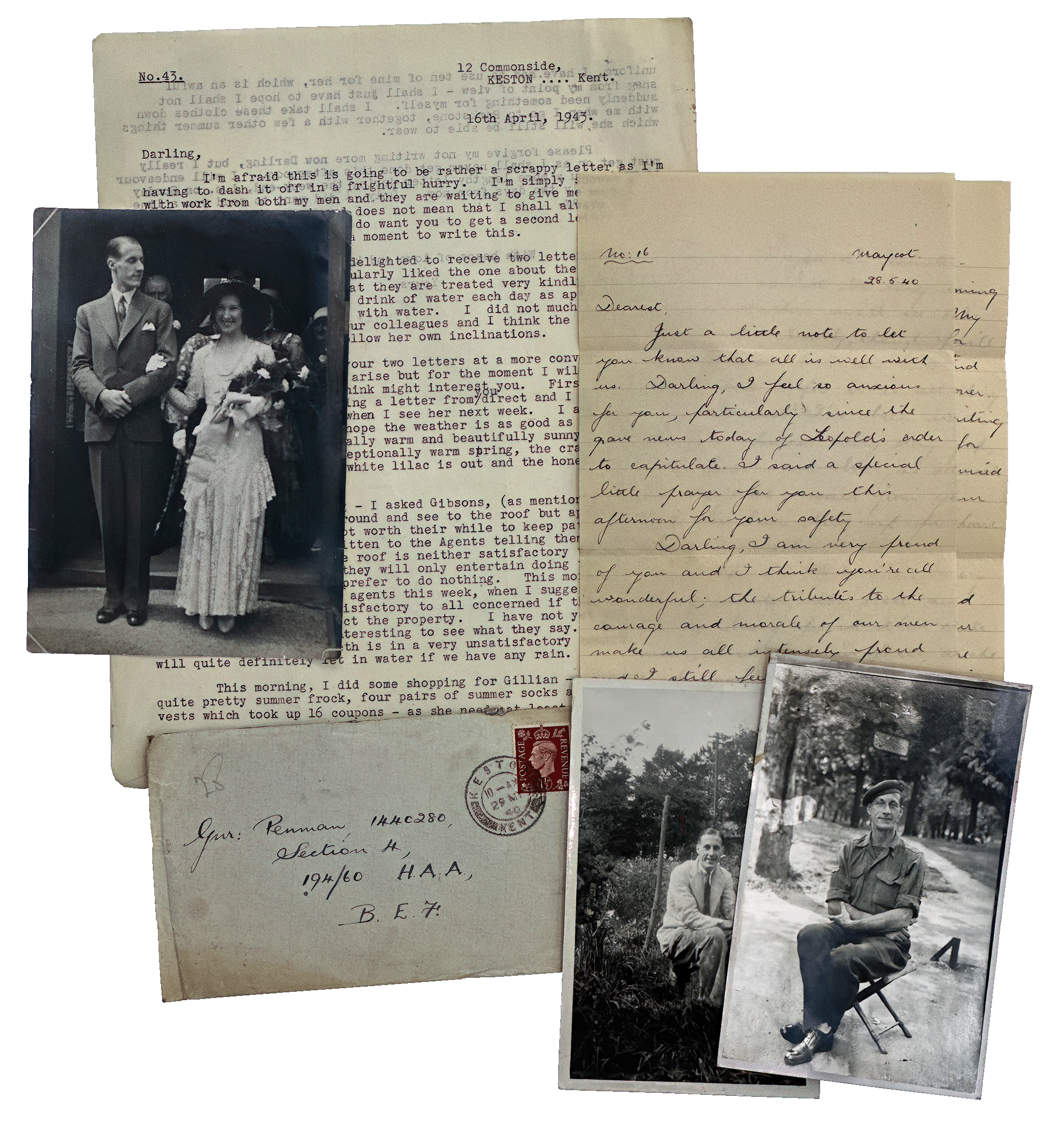
This archive, containing intimate details of my grandparents relationship during the war, were my family’s “Most Secret” documents.
In December 1937 the British Government passed the Air Raid Precautions (or ‘ARP’) Act. It required local governments to prepare to counter aerial attacks. It led to the creation of Air Raid Wardens, charged with first response, enforcing blackouts and reporting bomb damage. The hope was to have 800,000 wardens trained and in place before the outbreak of hostilities.
In June 1938 my grandfather, Cyril Kenneth Penman, volunteered as an Air Raid Warden. He was among the first 200,000 recruits at a time when many people still clung to hopes of peace.
By January 1939, following the Munich Crisis, war loomed so close that Britons could feel the chill of its shadow. When my grandmother, Teresina Evelina Penman, became an Air Raid Warden, the service was growing at a rate of 50,000 personnel a month.
“Terry” knew that when the bombers came, her duties would require her to leave her two year-old daughter, my mother Gillian, in the care of others. She also knew she had to do something.
Similarly compelled, Kenneth joined the Territorial Army. The papers he signed made it clear that though a volunteer during peacetime, the moment the government declared a state of emergency he would be activated and fully integrated into the Armed Forces. As a gunner in an anti-aircraft battery, he knew his regiment was first in line.
By October, over a million Air Raid Wardens were in place, the war had begun, and Kenneth had been deployed, prompting a correspondence with Terry that would last throughout the war. Writing by return Terry and Kenneth often exchanged three or more letters a week.
Nearly a thousand of these letters survive, having made it through the conflict, the loss of my grandparents, the destruction of their house, and multiple international relocations. They provide a unique view of the realities of war at home and abroad, and tell the story of a family trying to negotiate the personal, life-threatening, and mundane in a world where heavily censored letters are the only means of communication.
It is my hope that the story of my grandparents’ resilience and commitment in the face of adversity will serve as a resource for education, historical understanding, and as an inspiration to anyone facing an uncertain future.
The letters and documents, reproduced here with scans, transcriptions, and supplementary material, can be read chronologically and will be regularly updated until the entire corpus is online. Join our mailing list, or subscribe to our feed to keep up to date.
All rights have been reserved. These letters may not be reproduced, quoted, excerpted, collated, republished, used in AI systems, or in any other way not here described without prior written permission.